Call Us Today
901 755 4797
Tennessee winters bring unpredictable temperature swings that can drop from mild 50s to freezing 20s overnight, making a reliable furnace critical for your home’s comfort and safety. In our 65+ years serving the Memphis area, we’ve seen countless furnaces fail during the first hard freeze of the season—usually around mid-December when temperatures suddenly plunge below 25°F. This checklist helps Tennessee homeowners prepare their heating systems before winter arrives, preventing mid-season failures and reducing monthly energy bills.
Tennessee’s variable climate places unique stress on heating systems that other regions don’t experience. Memphis sees winter lows around 31°F, while Nashville and Knoxville can dip into the teens during January cold fronts. We’ve serviced thousands of furnaces across the Midsouth and consistently find that temperature fluctuations force systems to cycle more frequently than in consistently cold climates, accelerating wear on igniters, blower motors, and heat exchangers.
Regular furnace maintenance delivers three critical benefits based on our decades of field experience. First, it prevents mid-winter breakdowns by catching small issues—worn belts, dirty flame sensors, loose wire connections—before they cause complete system failures during the coldest nights. We respond to twice as many emergency calls in January from homes that skipped fall maintenance compared to those with annual tune-ups. Second, a properly maintained furnace runs 10-15% more efficiently, according to our combustion analyzer readings, directly lowering your monthly heating bills. Third, annual inspections protect your family’s safety by detecting carbon monoxide hazards and gas leaks that are common in furnaces over 10 years old.
Your furnace’s air filter traps dust, pollen, and debris before air circulates through your home. In the Memphis area, we find clogged filters are the number one cause of heating problems—responsible for roughly 40% of the no-heat service calls we receive each winter. Most filters need replacement every 1-3 months during heating season, though Tennessee’s high pollen counts and humidity often require more frequent changes.
For most Tennessee homes, MERV 8-13 filters provide the right balance between air quality and airflow. We don’t recommend MERV ratings above 13 for standard residential systems because they restrict airflow and force blower motors to work harder. Hold your filter up to light—if you can’t see through it, replace it immediately. Set a phone reminder to check your filter on the first of each month. Standard homes should replace filters every 90 days, while homes with pets should change them every 60 days, based on our testing of actual filter conditions in local homes.
A malfunctioning thermostat wastes energy and leaves rooms unevenly heated. We’ve diagnosed hundreds of thermostat issues in Tennessee homes, and testing takes only 10 minutes but prevents frustration when temperatures drop overnight. Change your thermostat from “cool” or “off” to “heat” mode, then listen for the furnace to start within 30 seconds to two minutes. If nothing happens, check for a tripped breaker or dead batteries before calling for service.
Set the temperature 5 degrees higher than the current room temperature, and wait 10 minutes—you should feel warm air from the vents, which should be at least 15-20 degrees warmer than the room temperature. Healthy furnaces cycle 3-8 times per hour, depending on outdoor temperature. Short-cycling (turning on and off every few minutes) indicates overheating or sensor issues, while continuous running suggests insufficient heating capacity. Either problem requires immediate professional inspection to prevent damage to the compressor or heat exchanger.
Safety Warning: This is a visual inspection only. Never attempt to disassemble or repair heat exchanger components yourself, as improper work creates serious carbon monoxide and explosion risks.
The heat exchanger is the metal chamber where combustion happens, heating air without mixing exhaust gases into your home. In our experience, cracks typically develop in furnaces 15-20 years old, and Tennessee’s humidity accelerates corrosion compared to drier climates. Turn off the power at the breaker before accessing the furnace cabinet, and use a flashlight to check for hairline fractures, gaps, or holes in the metal chambers.
Black soot buildup or rust-colored stains indicate incomplete combustion or moisture problems. We commonly find these conditions in Tennessee homes with crawlspace installations where humidity exceeds 60%. Light surface rust may be normal on older furnaces, but heavy flaking or soot requires professional cleaning and combustion adjustment. Listen for warning sounds: banging at startup indicates delayed ignition, causing gas buildup, rattling suggests loose panels or cracks, and squealing points to blower belt wear. Banging sounds pose an explosion risk—shut off the furnace at the breaker and call for emergency service.
Carbon monoxide is a colorless, odorless gas produced when fuel doesn’t burn completely. In Tennessee, we test CO levels during every gas furnace service call and find detectable levels in roughly 15% of units over 12 years old. Install CO detectors on every floor, outside sleeping areas, and near the furnace, and test them monthly by pressing the test button. Replace detectors every 5-7 years because sensors degrade even with working batteries—check the manufacturer’s date stamped on the back.
Know CO poisoning symptoms: headaches, dizziness, nausea, and confusion that improve when you leave the house indicate a leak requiring immediate evacuation and a 911 call. Never ignore these symptoms or assume they’re just a flu-like illness during the winter months.
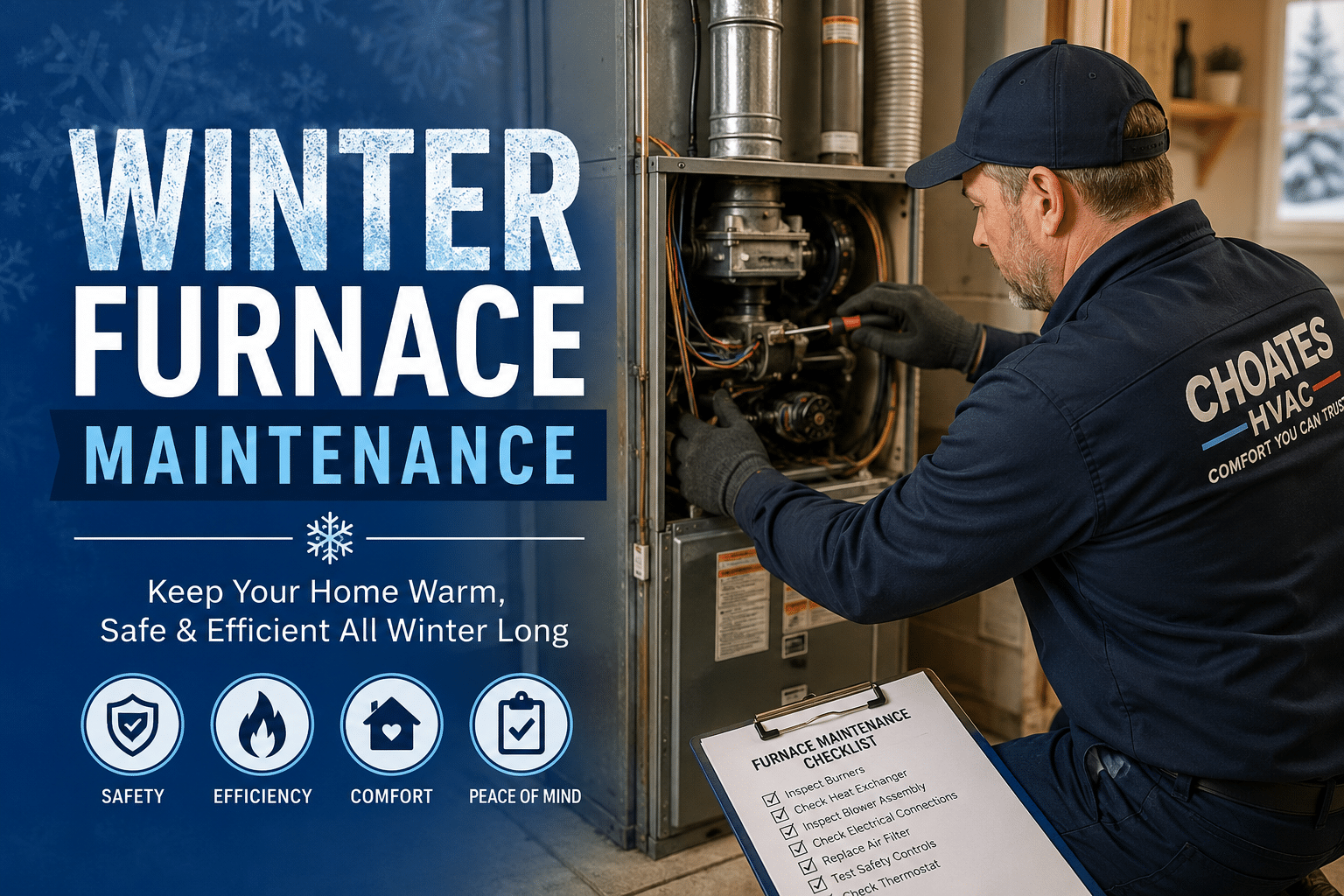
Annual professional maintenance typically costs $100-200 in the Memphis area but prevents $500-2,000 emergency repairs based on our service records. Schedule your heating system tune-up in October or early November, before Tennessee’s first cold snap. Our technicians vacuum dust from the blower assembly (which reduces airflow by up to 30% when neglected), clean burners, check gas pressure with calibrated manometers to verify proper combustion, test electrical connections with multimeters, and measure temperature rise across the heat exchanger to confirm efficiency.
These checks require specialized tools and training that take years to develop. We identify gas leaks using electronic detectors sensitive to parts-per-million levels, check flame-rollover switches that prevent fires, and test pressure switches that verify proper venting. This level of inspection protects your family from risks invisible to homeowners.
Based on energy audits we’ve performed throughout the Memphis area, simple actions alongside professional maintenance cut winter energy bills by 10-20%. Replace worn weatherstripping around doors and windows (costs $10-30 per door), caulk gaps where pipes or wires enter walls, and wrap exposed ductwork in unheated crawlspaces with R-6 insulation sleeves.
Set daytime temperatures to 68-70°F when home and 62-65°F at night. We’ve measured actual energy consumption in local homes and verified these settings balance comfort with efficiency. Walk through your home to verify furniture, curtains, and rugs don’t block supply or return vents—blocked returns create negative pressure that forces the furnace to run 15-25% longer per cycle based on our airflow measurements.
Since 1958, Choate’s has served Memphis and the Midsouth through thousands of Tennessee winters. Our licensed technicians average 10+ years of field experience and receive ongoing manufacturer training on the latest HVAC systems. We provide thorough inspections with written reports showing actual system measurements, transparent pricing with no hidden fees, and same-day service for urgent issues when possible.
Schedule your furnace tune-up before the next cold front arrives by calling Choate’s or requesting service online. We offer flexible financing options and maintenance membership plans that include priority scheduling, annual tune-ups, and 15% discounts on repairs—valuable protection during peak winter months when HVAC companies book out days in advance.